Natural scene interpretation, signage and infrastructure context in normal visibility.

Fused thermal and daylight imaging helps train and metro operators recognize people, animals, vehicles and infrastructure hazards in darkness, tunnels and difficult weather.
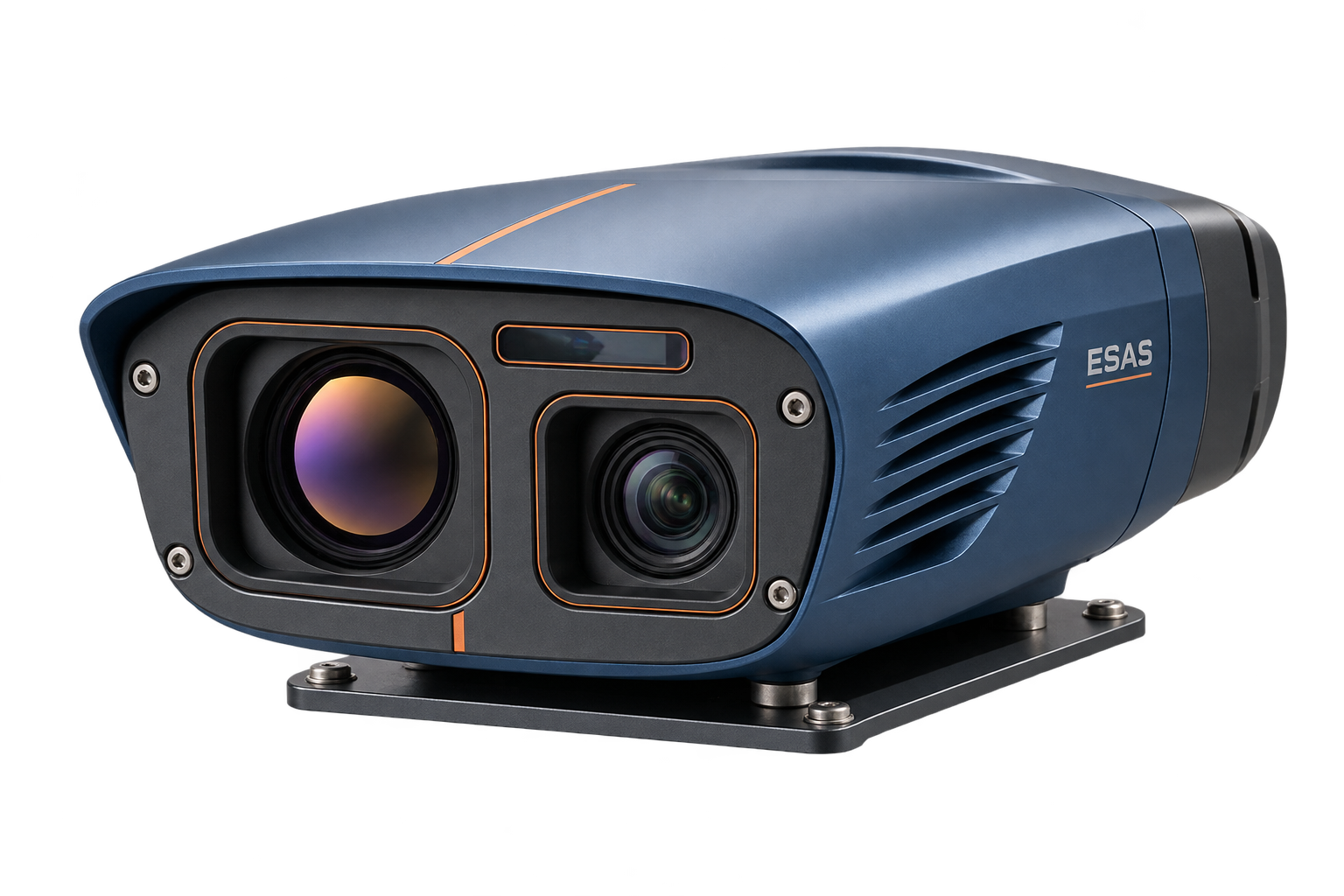
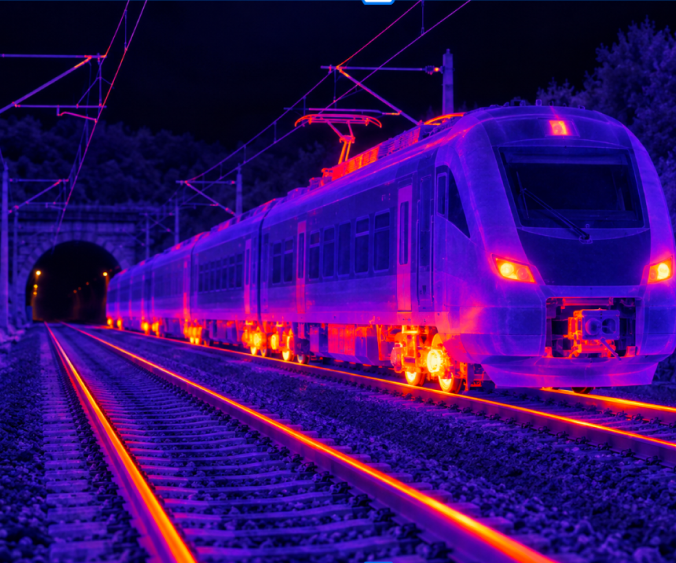
Visible cameras preserve familiar detail, while thermal imaging reveals heat contrast when illumination is poor. ESAS aligns both channels in real time, allowing the operator or onboard analytics to use the most informative view—or a fused image that combines both.
Natural scene interpretation, signage and infrastructure context in normal visibility.
Heat-based contrast without dependence on trackside or vehicle illumination.
Thermal cues overlaid on visible detail for faster situational understanding.
The ESAS R1 combines a long-wave infrared sensor, high-definition low-light camera and real-time image alignment in a sealed, vibration-resistant enclosure suited to rail vehicles.
Technical values are representative design targets and may be configured for the final application.
Synchronized thermal and visible channels observe the same forward field of view.
Calibration compensates for the different optics and maintains spatial registration.
Adaptive processing preserves visible detail while highlighting useful thermal contrast.
Video is delivered to the driver display, recorder or optional detection software.
Forward observation during night operation, poor illumination and changing weather.
Enhanced visibility in tunnels, portals, depots and mixed-light environments.
Support recognition of people, animals, vehicles and objects within the corridor.
Synchronized thermal and visible video for event review and operational analysis.
Talk to ESAS about your industrial, rail or marine imaging requirement.